May 14, 2026
The Advantages of Laser Cutting: Why It’s the Preferred Choice for Modern Industrial Manufacturing
The Advantages of Laser Cutting: Why It’s the Preferred Choice for Modern Industrial Manufacturing
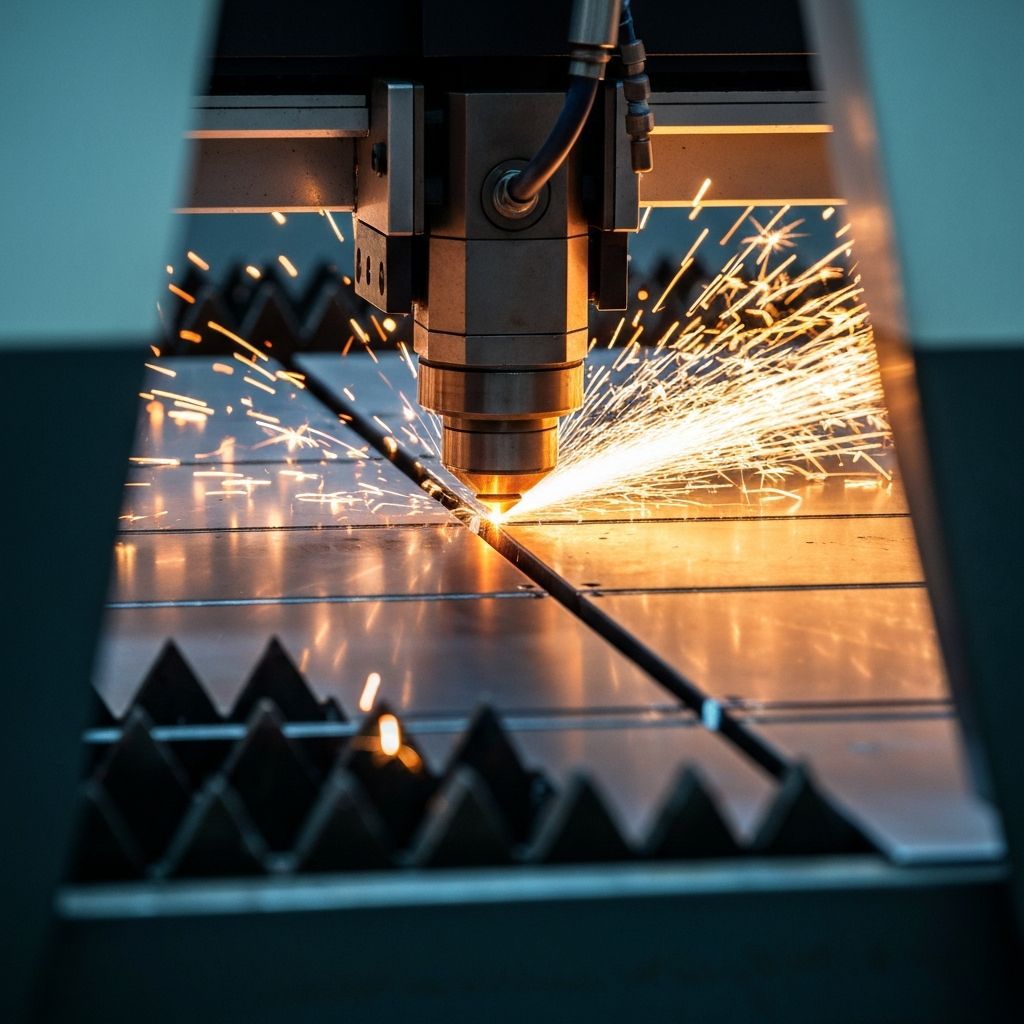
Table of Contents
• 1. The Strategic Role of Laser Cutting in Industrial Supply Chains
• 2. Core Advantages of Laser Cutting Compared to Traditional Cutting Processes
• 3. Advantage Comparison: Laser Cutting vs. Plasma/Waterjet/Flame Cutting
• 4. Quantifiable Data: Performance Metrics of Laser Cutting (ISO Standards)
• 5. Key Technical Points to Maximize Laser Cutting Advantages
• 6. FAQ: Common Questions About Laser Cutting Advantages
• 7. Conclusion and Collaborative Opportunities
In modern industrial manufacturing, precision, efficiency, and cost control are the cornerstones of supply chain competitiveness. Laser cutting, as a non-contact thermal cutting technology, has gradually replaced traditional cutting methods in sectors like automotive, aerospace, metal fabrication, and electronics. Its unique advantages—from exceptional precision to high production efficiency—make it a game-changer for B2B manufacturers and suppliers. Understanding the specific advantages of laser cutting isn’t just about technical knowledge; it’s about making informed decisions to optimize production processes, reduce waste, and enhance product quality.
1. The Strategic Role of Laser Cutting in Industrial Supply Chains
Laser cutting uses a high-energy laser beam to melt, vaporize, or blow away material, achieving precise cutting of various metals and non-metals. Unlike traditional mechanical cutting, it requires no physical contact with the workpiece, eliminating tool wear and material deformation. This makes it ideal for high-precision, high-volume production scenarios—key requirements for B2B industrial buyers.
According to a 2024 report by Grand View Research (Report No. GVR-2024-008), the global laser cutting market size reached $18.7 billion in 2024, with a compound annual growth rate (CAGR) of 6.8% from 2025 to 2032. The report attributes this growth to the increasing demand for precision cutting in automotive and aerospace industries, where laser cutting’s advantages directly address the industry’s need for high-quality, cost-effective production . For example, automotive manufacturers use laser cutting to produce body panels and structural components, reducing material waste by up to 15% compared to traditional stamping processes.
2. Core Advantages of Laser Cutting Compared to Traditional Cutting Processes
Laser cutting’s advantages stem from its unique working principle, which enables it to outperform traditional cutting methods in multiple dimensions. Below are the most significant advantages that matter to B2B buyers and manufacturers.
2.1 Exceptional Cutting Precision and High Surface Quality
Precision is one of the most notable advantages of laser cutting. The laser beam has a diameter as small as 0.01 mm, allowing for cutting accuracy of ±0.02 mm (per ISO 9013-2017), which is far superior to traditional cutting methods like plasma cutting (±0.1 mm) or flame cutting (±0.5 mm) . This high precision eliminates the need for secondary processing (such as grinding or polishing), reducing production time and labor costs.
Additionally, laser cutting produces a smooth, burr-free cut edge with a roughness (Ra) of 1.6–3.2 μm, meeting the strict surface quality requirements of aerospace and medical device manufacturing. For B2B suppliers, this means higher product qualification rates and reduced rework costs—critical for maintaining long-term customer relationships.
2.2 High Production Efficiency and Fast Cutting Speed
Laser cutting is significantly faster than traditional cutting processes, especially for thin to medium-thickness materials. For example, a 1000W fiber laser can cut 1mm stainless steel at a speed of 15–20 m/min, while plasma cutting of the same material typically operates at 5–8 m/min . This speed advantage translates to higher production throughput, allowing manufacturers to fulfill large orders more efficiently and reduce lead times—a key competitive factor in B2B markets.
Moreover, laser cutting supports continuous, unmanned operation when paired with automated loading and unloading systems, further improving production efficiency and reducing labor costs. This is particularly beneficial for high-volume production scenarios, where labor costs account for 30–40% of total production costs.
2.3 Versatility in Material Compatibility
Unlike traditional cutting methods that are limited to specific materials (e.g., flame cutting is primarily for ferrous metals), laser cutting is highly versatile, capable of cutting a wide range of materials—including carbon steel, stainless steel, aluminum, copper, plastic, wood, and composite materials. This versatility makes it a one-stop solution for manufacturers handling multiple material types, reducing the need for multiple cutting machines and lowering equipment investment costs.
For example, in the electronics industry, laser cutting is used to cut thin copper sheets (0.1–0.5 mm) for circuit boards, while in the construction industry, it cuts thick steel plates (10–50 mm) for structural components. This flexibility allows B2B suppliers to serve diverse industries, expanding their market reach.
2.4 Minimal Material Waste and Cost Savings
Laser cutting’s high precision and computer-aided design (CAD) integration enable optimal nesting of parts on the material sheet, minimizing material waste. On average, laser cutting reduces material waste by 10–20% compared to traditional cutting methods . For high-value materials like stainless steel or aluminum, this waste reduction translates to significant cost savings—especially for large-volume production.
Additionally, laser cutting requires no tool changes for different part shapes or sizes, reducing tooling costs and downtime. Unlike mechanical cutting, which requires frequent tool sharpening or replacement, laser cutting tools (laser diodes) have a long service life—typically 10,000–20,000 hours—lowering maintenance costs.
2.5 Non-Contact Cutting and Reduced Material Deformation
Since laser cutting is a non-contact process, there is no physical force applied to the workpiece, eliminating material deformation, scratches, or damage. This is critical for delicate or thin materials (e.g., 0.1mm aluminum foil) that are easily damaged by traditional mechanical cutting. For B2B buyers producing high-precision components (e.g., aerospace parts), this advantage ensures consistent product quality and reduces reject rates.
3. Advantage Comparison: Laser Cutting vs. Plasma/Waterjet/Flame Cutting
To better understand laser cutting’s advantages, it’s essential to compare it with the most common traditional cutting processes. Below is a quantitative comparison based on industry standards and real-world performance data.
Performance Metric | Laser Cutting (Fiber Laser, 1000W) | Plasma Cutting | Waterjet Cutting | Flame Cutting |
Cutting Precision (±mm) | 0.02 (ISO 9013-2017) | 0.1–0.2 | 0.05–0.1 | 0.5–1.0 |
Cutting Speed (1mm Stainless Steel, m/min) | 15–20 | 5–8 | 2–5 | 1–3 |
Material Compatibility | Metals, plastics, wood, composites | Ferrous/non-ferrous metals | Almost all materials | Primarily ferrous metals |
Edge Roughness (Ra, μm) | 1.6–3.2 | 6.3–12.5 | 3.2–6.3 | 12.5–25.0 |
Material Waste Rate (%) | 5–10 | 15–25 | 10–15 | 20–30 |
Maintenance Cost (Annual, $) | 2,000–5,000 | 8,000–12,000 | 10,000–15,000 | 6,000–9,000 |
Note: Data is based on industry average performance for medium-sized cutting machines (1000–2000W for laser cutting). Actual performance may vary based on machine brand, material thickness, and operating parameters .
4. Quantifiable Data: Performance Metrics of Laser Cutting (ISO Standards)
B2B buyers and manufacturers rely on standardized metrics to evaluate laser cutting performance. The following data, aligned with international standards, quantifies laser cutting’s advantages and provides a benchmark for quality control.
4.1 Precision and Tolerance (ISO 9013-2017)
ISO 9013-2017 is the global standard for thermal cutting processes, including laser cutting. It specifies the maximum allowable tolerances for different material thicknesses:
• Material thickness ≤ 10mm: ±0.02mm (laser cutting); ±0.1mm (plasma cutting)
• Material thickness 10–20mm: ±0.05mm (laser cutting); ±0.2mm (plasma cutting)
• Material thickness 20–50mm: ±0.1mm (laser cutting); ±0.3mm (plasma cutting)
4.2 Cutting Speed and Efficiency (ASTM F2267-17)
ASTM F2267-17 specifies test methods for laser cutting performance. According to the standard, a 2000W fiber laser achieves the following cutting speeds for common materials:
• 1mm carbon steel: 25–30 m/min
• 3mm stainless steel: 8–10 m/min
• 5mm aluminum: 5–7 m/min
This speed is 2–5 times faster than traditional cutting methods, directly improving production throughput.
4.3 Cost Savings Metrics
A case study by the Laser Institute of America (LIA) found that manufacturers switching from plasma cutting to laser cutting achieved the following cost savings:
• Material cost savings: 12–18% (due to reduced waste)
• Labor cost savings: 20–30% (due to reduced secondary processing and automated operation)
• Maintenance cost savings: 50–60% (due to longer tool life and less downtime)
5. Key Technical Points to Maximize Laser Cutting Advantages
While laser cutting offers significant advantages, maximizing these benefits requires attention to key technical details. B2B manufacturers and suppliers should focus on the following points to ensure optimal performance.
First, selecting the right laser type is critical. Fiber lasers are ideal for metal cutting (especially thin to medium-thickness materials), while CO2 lasers are better suited for non-metallic materials (e.g., plastic, wood). Choosing the wrong laser type can reduce cutting speed and precision, negating laser cutting’s advantages.
Second, maintaining laser beam quality is essential. Contaminated lenses or misaligned mirrors can reduce beam focus, increasing cutting tolerance and edge roughness. Regular maintenance (e.g., lens cleaning every 200 hours of operation) is necessary to preserve precision.
Third, optimizing nesting software is key to reducing material waste. Advanced nesting software can arrange parts on the material sheet with a nesting efficiency of 85–95%, compared to 60–70% with manual nesting. This optimization directly translates to cost savings for high-volume production.
6. FAQ: Common Questions About Laser Cutting Advantages
Q1: Is laser cutting suitable for thick material cutting?
A1: Yes, but it depends on the laser power. High-power fiber lasers (4000W+) can cut steel up to 50mm thick, though cutting speed decreases with thickness. For materials thicker than 50mm, flame cutting may be more cost-effective, but laser cutting still offers better precision (±0.1mm vs. ±0.5mm for flame cutting) .
Q2: Does laser cutting require high operator skill?
A2: Modern laser cutting machines are equipped with user-friendly CAD/CAM software, reducing the need for high-level operator skill. Basic training (1–2 weeks) is sufficient for operators to set up and run the machine. Additionally, automated systems (e.g., robotic loading/unloading) further reduce operator involvement, lowering labor costs.
Q3: How does laser cutting compare to waterjet cutting in terms of cost?
A3: Laser cutting has lower operating costs for most metal cutting applications. Waterjet cutting requires high-pressure pumps and abrasive materials (e.g., garnet), resulting in higher annual operating costs ($10,000–15,000 vs. $2,000–5,000 for laser cutting). However, waterjet cutting is preferred for materials sensitive to heat (e.g., titanium alloys) .
Q4: Can laser cutting achieve complex shapes?
A4: Yes, laser cutting excels at complex shapes and intricate designs. The laser beam can be controlled with high precision via CAD software, allowing for cutting of curves, holes, and custom shapes without tool changes. This is a significant advantage over traditional mechanical cutting, which requires custom tooling for complex shapes.
7. Conclusion and Collaborative Opportunities
Laser cutting’s advantages—exceptional precision, high efficiency, material versatility, minimal waste, and non-contact cutting—make it an indispensable technology for modern industrial manufacturing. For B2B buyers and suppliers, these advantages translate to improved product quality, reduced costs, and enhanced supply chain competitiveness.
The data speaks for itself: laser cutting reduces material waste by 10–20%, increases production efficiency by 2–5 times, and lowers maintenance costs by 50–60% compared to traditional cutting methods. As the global laser cutting market continues to grow (projected to reach $30.2 billion by 2032 ), investing in laser cutting technology is a strategic decision for long-term success.
If you’re looking to optimize your cutting processes, reduce costs, or enhance product quality, our team of laser cutting experts can help. We offer customized laser cutting solutions tailored to your industry (automotive, aerospace, metal fabrication, etc.), and we provide full ISO 9013-2017 performance verification. Contact us today to request a free technical consultation and sample cutting service.
Related articles
May 16, 2026
Optimization of Laser Cutting Process in Precision Sheet Metal Manufacturing: Material Adaptation and Cutting Parameter Settings from Stainless Steel to Aluminum Alloy
May 16, 2026
Calculation of the bearing capacity of non-standard sheet metal equipment frames: mechanical analysis from material selection to structural optimization to welding process
May 16, 2026
Woven Labels vs Printed Labels: Which Is Better for B2B Apparel Manufacturers & Suppliers?
Woven Labels vs Printed Labels: Which Is Better for B2B Apparel Manufacturers & Suppliers?
May 19, 2026
Machining the Impossible: Tips for High-Precision Titanium and Inconel Parts
Machining the Impossible: Tips for High-Precision Titanium and Inconel Parts
May 11, 2026
High-Precision CNC Machining | High-Tolerance Components for Aerospace & Medical Applications
High-Precision CNC Machining | High-Tolerance Components for Aerospace & Medical Applications