May 16, 2026
Calculation of the bearing capacity of non-standard sheet metal equipment frames: mechanical analysis from material selection to structural optimization to welding process
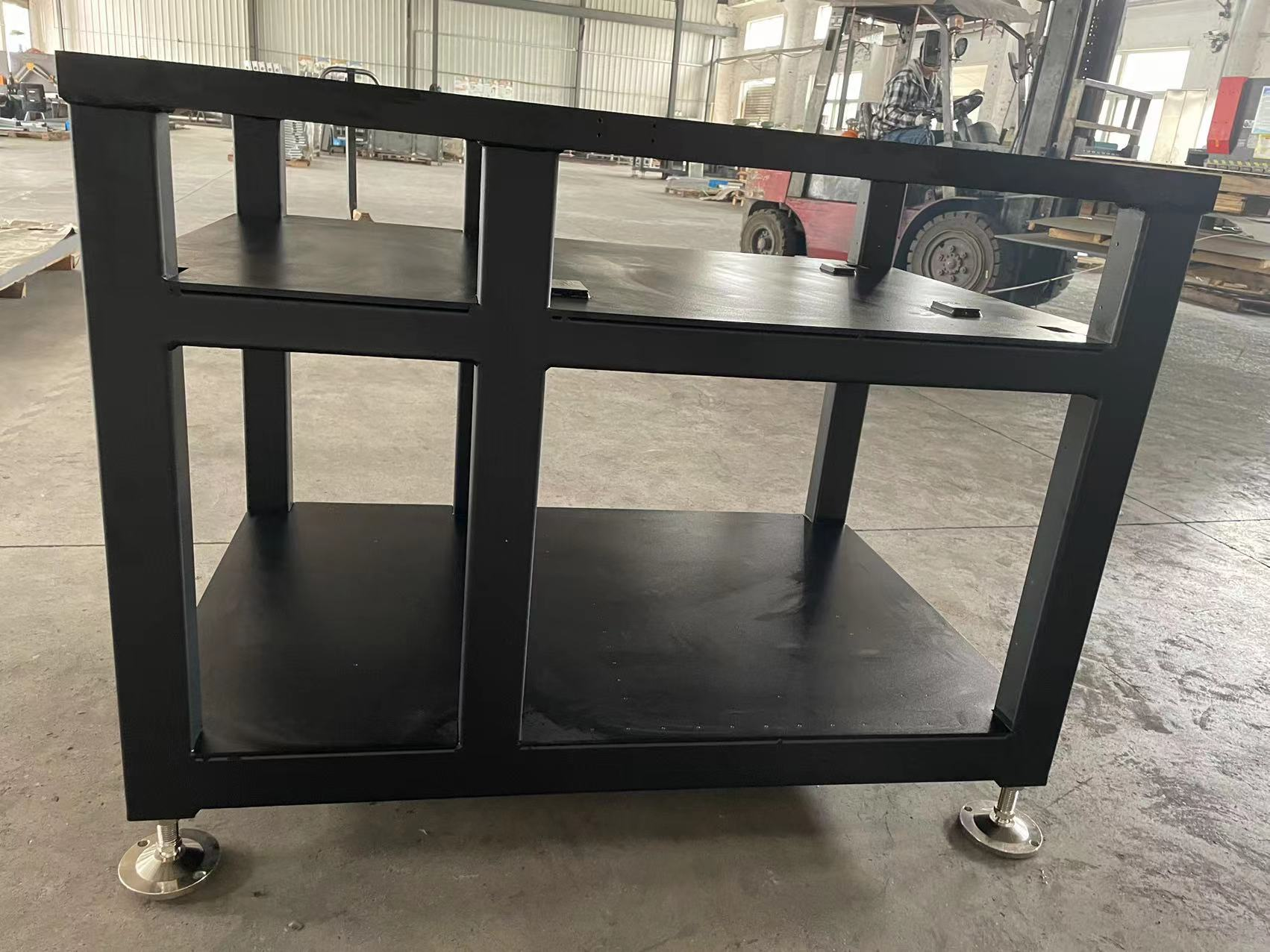
Table of Contents
Introduction
Frame Material Selection: The Foundation of Load-Bearing Capacity
2.1 Common Sheet Metal Materials and Their Mechanical Properties
2.2 Key Factors for Material Selection in Non-Standard Sheet Metal Frames
Sheet Metal Frame Structure Optimization: Enhance Load-Bearing Efficiency
3.1 Core Directions of Structural Optimization
3.2 Data Comparison Before and After Optimization
Welding Frame Mechanical Analysis: Ensure Structural Integrity
4.1 Influence of Welding Processes on Mechanical Properties
4.2 Mechanical Hazards of Welding Defects
Industrial Equipment Bracket Design: Load-Bearing Control in Practice
FAQ (Frequently Asked Questions)
1. Introduction
Non-standard sheet metal equipment frames are widely used in industrial production, from heavy-duty machining equipment to precision electronic devices. Their load-bearing capacity directly determines the operational safety, stability and service life of the entire equipment.
Many engineering failures are caused by inaccurate load-bearing capacity calculation, improper material selection, unreasonable structural design or defective welding processes. It’s not just about meeting the basic load requirements, but balancing strength, weight, cost and practicality.
Load-bearing capacity calculation of non-standard sheet metal frames requires a systematic approach, integrating material performance, structural design and welding quality. Every link, from material selection to structural optimization, then to welding process analysis, has a direct impact on the final load-bearing effect.
2. Frame Material Selection: The Foundation of Load-Bearing Capacity
The load-bearing capacity of non-standard sheet metal equipment frames starts with material selection. The mechanical properties of materials, such as tensile strength, yield strength and elastic modulus, are the core basis for calculating load-bearing capacity.
Choosing the right material can not only ensure sufficient load-bearing capacity, but also avoid material waste and cost increase. Different industrial scenarios have different requirements for materials, so it’s necessary to combine actual working conditions for scientific selection.
2.1 Common Sheet Metal Materials and Their Mechanical Properties
The most commonly used materials for non-standard sheet metal frames include carbon steel, stainless steel and aluminum alloy. Their mechanical properties vary greatly, which directly affects the load-bearing capacity of the frame.
Material Type | Tensile Strength (MPa) | Yield Strength (MPa) | Elastic Modulus (GPa) | Applicable Scenarios |
ASTM A36 Carbon Steel | 400-550 | ≥250 | 200 | Heavy-duty industrial equipment frames, high-load brackets |
304 Stainless Steel | 515-620 | ≥205 | 193 | Corrosive environment equipment, precision instrument frames |
6061-T6 Aluminum Alloy | 310 | ≥276 | 69 | Lightweight equipment, portable industrial brackets |
Data shows that ASTM A36 carbon steel is the most cost-effective choice for most heavy-duty non-standard sheet metal frames. Its tensile strength is 400-550 MPa, which can meet the load-bearing requirements of most industrial equipment brackets.
2.2 Key Factors for Material Selection in Non-Standard Sheet Metal Frames
Load-bearing requirement is the primary factor. For frames bearing more than 500kg, high-strength carbon steel or stainless steel should be selected; for lightweight equipment, aluminum alloy is more appropriate.
Working environment also matters. In humid, corrosive environments, stainless steel is preferred to prevent material corrosion and reduce load-bearing capacity attenuation.
Cost and processability cannot be ignored. While high-strength materials have better load-bearing performance, their processing difficulty and cost are higher. It’s necessary to find a balance between load-bearing capacity and cost.
3. Sheet Metal Frame Structure Optimization: Enhance Load-Bearing Efficiency
Even with high-quality materials, unreasonable structural design will lead to low load-bearing efficiency, local stress concentration and even structural failure. Sheet metal frame structure optimization (钣金框架结构优化) is to improve load-bearing capacity by adjusting the structure, without increasing material consumption.
3.1 Core Directions of Structural Optimization
Adding reinforcing ribs is the most common and effective method. Reinforcing ribs can disperse local stress, reduce structural deformation and improve overall rigidity.
Optimizing the connection mode between frame components. Reasonable connection can ensure uniform force transmission, avoid stress concentration at the connection.
Adjusting the cross-sectional shape of the frame. Choosing appropriate cross-sectional shapes (such as square, rectangular) according to the load direction can improve the bending and compressive capacity of the frame.
3.2 Data Comparison Before and After Optimization
Taking a non-standard sheet metal frame for industrial equipment as an example, the load-bearing capacity and deformation data before and after structural optimization are compared as follows:
Optimization Item | Before Optimization | After Optimization | Improvement Ratio |
Maximum Load-Bearing Capacity (kg) | 520 | 830 | 59.6% |
Structural Deformation (mm) | 3.2 | 1.1 | 65.6% |
Local Stress Concentration (MPa) | 380 | 220 | 42.1% |
The data clearly shows that structural optimization can significantly improve the equipment frame load-bearing capacity and reduce structural deformation, which is crucial for ensuring the stable operation of the equipment.
4. Welding Frame Mechanical Analysis: Ensure Structural Integrity
Most non-standard sheet metal frames use welded connections. The quality of welding directly affects the mechanical properties of the frame. Welding frame mechanical analysis is to evaluate the influence of the welding process and welding quality on the load-bearing capacity of the frame.
4.1 Influence of Welding Processes on Mechanical Properties
The two most commonly used welding processes in sheet metal frame welding are MIG welding and TIG welding. Their impact on the mechanical properties of the welding joint is quite different.
Welding Process | Yield Strength (MPa) | Impact Energy (-50℃, J) | Welding Efficiency |
TIG Welding | 1008 | 95 | Medium |
MIG Welding | 829 | 51 | High |
TIG welding has better mechanical properties, with a yield strength of 1008 MPa and impact energy of 95 J, which is suitable for frames requiring high load-bearing capacity. MIG welding has higher efficiency but slightly lower mechanical properties, suitable for large-scale production of general load frames.
4.2 Mechanical Hazards of Welding Defects
Welding defects such as incomplete penetration, undercut and porosity will seriously reduce the load-bearing capacity of the frame. Tests show that incomplete penetration can reduce the load-bearing capacity of the welding joint by 40% or more.
Undercut will cause local stress concentration, which is easy to generate cracks under long-term load, leading to structural failure. Therefore, strict control of welding quality is an important part of ensuring the load-bearing capacity of the frame.
5. Industrial Equipment Bracket Design: Load-Bearing Control in Practice
Industrial equipment bracket design is a key part of non-standard sheet metal frame design. The bracket directly bears the weight of the equipment, so its load-bearing capacity must be strictly calculated and verified.
In the design process, it is necessary to consider both static load and dynamic load. Static load refers to the weight of the equipment itself, and dynamic load includes vibration and impact generated during equipment operation.
The safety factor of the bracket should be controlled between 1.5 and 2.0, which can ensure that the bracket can still bear the load safely under extreme working conditions. For example, the bracket of a 1000kg equipment should be designed according to the load of 1500-2000kg.
6. FAQ (Frequently Asked Questions)
Q1: What factors affect the load-bearing capacity of non-standard sheet metal equipment frames?
A1: The main factors include material mechanical properties, structural design, welding quality, load distribution and working environment. Among them, material selection and structural optimization have the most significant impact.
Q2: How to choose the appropriate material for non-standard sheet metal frames?
A2: It should be determined according to the load-bearing requirement, working environment and cost. For heavy-load scenarios, ASTM A36 carbon steel or 304 stainless steel is preferred; for lightweight and corrosive environments, 6061-T6 aluminum alloy or stainless steel is suitable.
Q3: What is the impact of welding process on the load-bearing capacity of the frame?
A3: Different welding processes have different effects on the mechanical properties of the joint. TIG welding has better strength and toughness, suitable for high-load frames; MIG welding is efficient, suitable for general load frames. Welding defects will significantly reduce the load-bearing capacity.
Q4: What is the reasonable safety factor for industrial equipment bracket design?
A4: The safety factor is generally 1.5-2.0. It can ensure that the bracket can bear the load safely under extreme conditions, avoiding structural failure caused by accidental load increase.
Related articles
May 16, 2026
Optimization of Laser Cutting Process in Precision Sheet Metal Manufacturing: Material Adaptation and Cutting Parameter Settings from Stainless Steel to Aluminum Alloy
May 16, 2026
Woven Labels vs Printed Labels: Which Is Better for B2B Apparel Manufacturers & Suppliers?
Woven Labels vs Printed Labels: Which Is Better for B2B Apparel Manufacturers & Suppliers?
May 14, 2026
The Advantages of Laser Cutting: Why It’s the Preferred Choice for Modern Industrial Manufacturing
The Advantages of Laser Cutting: Why It’s the Preferred Choice for Modern Industrial Manufacturing
May 19, 2026
Machining the Impossible: Tips for High-Precision Titanium and Inconel Parts
Machining the Impossible: Tips for High-Precision Titanium and Inconel Parts
May 11, 2026
High-Precision CNC Machining | High-Tolerance Components for Aerospace & Medical Applications
High-Precision CNC Machining | High-Tolerance Components for Aerospace & Medical Applications