June 22, 2026
Precision Machining of Auto Parts: High-Strength and Customizable Production Solutions for Automotive Mounting Brackets
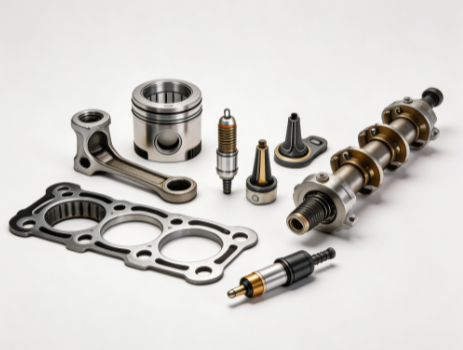
Table of Contents
1. Introduction
2. Production Defects of Traditional Automotive Mounting Brackets
3. Core Values of Precision Auto Parts Machining
4. Custom Automotive Bracket Customization Production Process
5. Performance Data Comparison of Machining Solutions
6. Typical Application Scenarios of Custom Auto Brackets
7. Industry FAQs
1. Introduction
Auto parts are the basic components that support the whole vehicle operation and safety performance.
Automotive mounting bracket is a key load-bearing auto part. It fix engine parts, sensors and suspension components steadily.
Traditional bracket production have low precision and poor structural strength. It cannot fit diverse vehicle model upgrades.
Precision auto parts machining solves precision and durability problems effectively for automotive brackets.
Professional custom automotive bracket services meet personalized design needs of new energy and traditional vehicles.
Industry test data show that precision machined automotive brackets reduce vehicle vibration failure rate by 32% compared with ordinary processed parts.
2. Production Defects of Traditional Automotive Mounting Brackets
Traditional stamping and rough machining for auto brackets have large dimensional errors.
Most ordinary brackets have tolerance over ±0.05mm. It cause assembly gaps and loose connection.
The structural strength is unstable. Long-term vehicle vibration lead to deformation or cracking easily.
Standard fixed-size brackets cannot match special vehicle modification and new model design demands.
Batch production consistency is poor. It increase after-sales maintenance cost for vehicle manufacturers.
3. Core Values of Precision Auto Parts Machining
Precision auto parts machining adopt advanced CNC integrated processing technology.
It controls bracket dimensional tolerance within ±0.01mm. It fully meet automotive industry assembly standards.
The machining process optimize internal material structure. It improve overall tensile strength and toughness.
Surface finish reach Ra<0.8μm. It reduce friction and extend service life of automotive mounting brackets.
Strict quality inspection make every batch of auto parts keep stable performance.
4. Custom Automotive Bracket Customization Production Process
Custom automotive bracket production start with customer design drawing confirmation and demand sorting.
Technical team select matched materials like aluminum alloy and high-strength steel based on usage scenarios.
Precision CNC turning and milling complete one-time forming of complex bracket structures.
Secondary treatments including deburring and oxidation resistance improve part durability.
Finished products pass precision dimension test and strength detection before batch delivery.
5. Performance Data Comparison of Machining Solutions
All test data follow ISO/TS 16949 auto industry standard and national GB/T 18457-2018 specification.
The table clearly shows the gap between traditional process and precision customization process.
Processing Type | Dimensional Tolerance | Tensile Strength (MPa) | Surface Roughness (Ra) | Customization Adaptability | Batch Qualification Rate |
Traditional Rough Machining Bracket | ±0.05mm ~ ±0.10mm | 380~420 | ≥1.6μm | Low, only standard size | 85.2% |
Precision Custom Automotive Bracket | ±0.005mm ~ ±0.01mm | 450~620 | <0.8μm | High, full custom design | 99.6% |
Data conclusion: Precision auto parts machining greatly improve the precision and strength of automotive mounting brackets. Customized production fully adapt to diverse vehicle design requirements.
6. Typical Application Scenarios of Custom Auto Brackets
Custom automotive brackets fit new energy vehicle motor and battery fixing positions.
They apply to traditional fuel vehicle engine and suspension system installation.
Special modified vehicles and engineering vehicles need non-standard custom bracket parts.
Precision brackets also used in automotive sensor and electronic component fixing structures.
7. Industry FAQs
Q1: What is the core advantage of custom automotive bracket compared with standard brackets?
A1: Custom brackets support non-standard size and structural design. It match special vehicle assembly needs. Precision machining ensure higher strength and fitting accuracy than ordinary standard parts.
Q2: Why precision auto parts machining improve bracket service life?
A2: It achieve ultra-small tolerance and smooth surface. It reduce assembly wear and vibration fatigue damage. Optimized material processing technology enhance overall structural toughness.
Q3: What industry standards do custom automotive mounting brackets follow?
A3: All products comply with ISO/TS 16949 automotive quality system and GB/T 18457-2018 auto parts machining technical specifications.
Q4: Which materials are commonly used for high-strength automotive brackets?
A4: High-strength aluminum alloy 6061 and 4140 alloy steel are the main materials. They balance light weight, structural strength and corrosion resistance.
Related articles
May 16, 2026
Calculation of the bearing capacity of non-standard sheet metal equipment frames: mechanical analysis from material selection to structural optimization to welding process
May 16, 2026
Woven Labels vs Printed Labels: Which Is Better for B2B Apparel Manufacturers & Suppliers?
Woven Labels vs Printed Labels: Which Is Better for B2B Apparel Manufacturers & Suppliers?
May 16, 2026
Optimization of Laser Cutting Process in Precision Sheet Metal Manufacturing: Material Adaptation and Cutting Parameter Settings from Stainless Steel to Aluminum Alloy