November 5, 2026
Precision Sheet Metal Assembly for Reliable Equipment Builds
A cabinet can look right and still be difficult to assemble. A mounting face may become inaccessible after a cover goes on, or a cable route may require a finished panel to come off again.
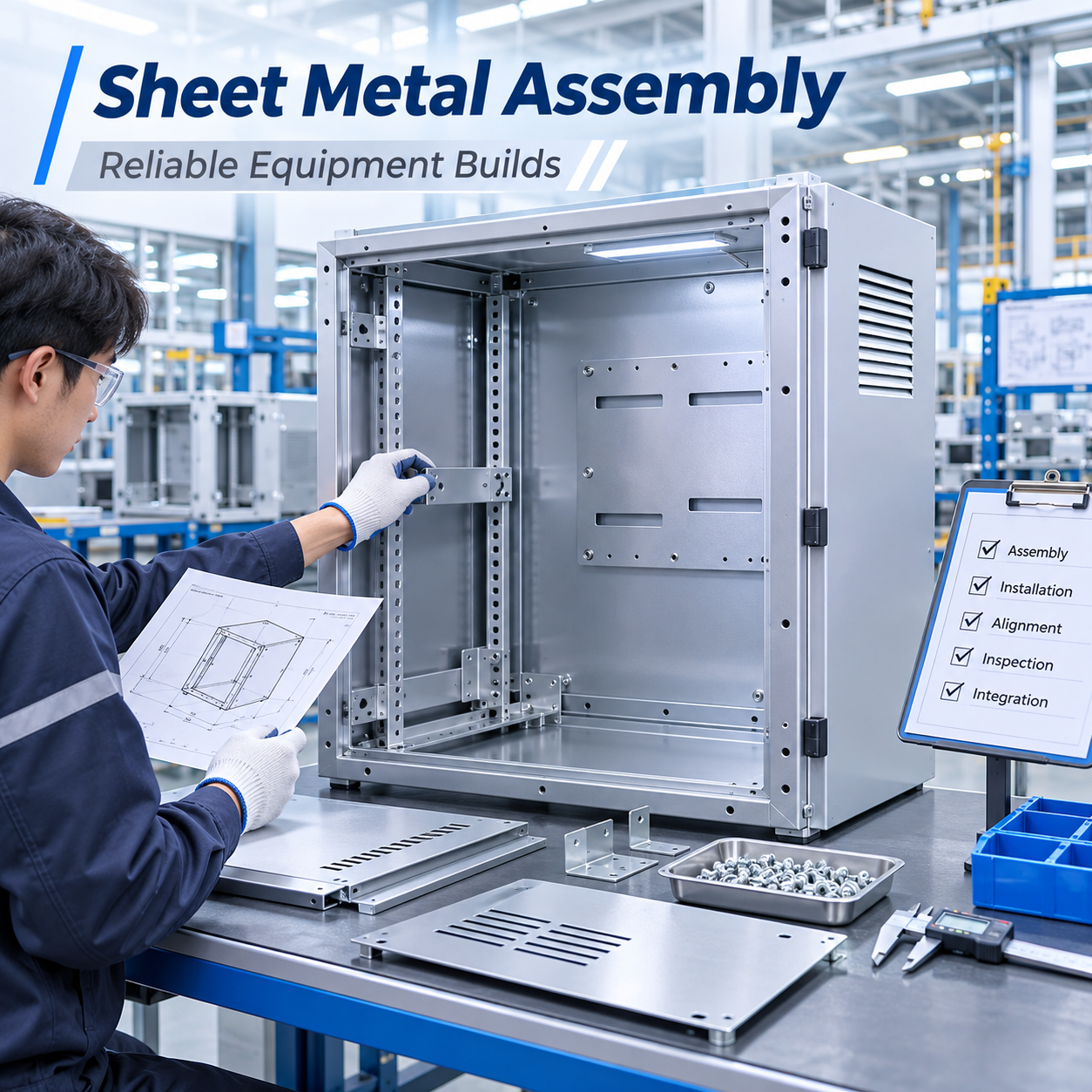
A cabinet can look right and still be difficult to assemble. A mounting face may become inaccessible after a cover goes on, or a cable route may require a finished panel to come off again. Precision sheet metal assembly depends on planning those interfaces before the first component is fitted.
At HDT, our sheet metal fabrication and mechanical assembly services connect component manufacture with equipment integration. For buyers, the practical priority is a build sequence that preserves alignment, protects finished surfaces and leaves enough access for inspection. A clear drawing package helps turn those requirements into repeatable work.
Contents
Prepare components before assembly
Establish the base and installation sequence
Coordinate access and inspection
Compare assembly risks and controls
Learn from an electrical enclosure redesign
Specify the purchasing handover
Buyer questions
Discuss your equipment assembly
Prepare components before assembly
Assembly should begin with parts that have passed the required inspection. A nonconforming bracket does not become acceptable because someone can force it into position. Confirm part identity, drawing revision and inspection status before releasing components to the build.
Deburring, chamfering, cleaning and specified protective treatments belong ahead of the installation steps they support. Burrs can interfere with seating and damage nearby components; dirt trapped between mating surfaces can prevent proper contact. Where the route calls for coating and drying before final assembly, complete those stages and protect the finish during handling.
This does not mean every treatment must precede every joining operation. Welded subassemblies, for example, require a route compatible with their later finishing. The useful rule is to prepare each component for its next operation and avoid putting delicate or finished items through unnecessary rework.
Keep accepted components clean
Inspection approval is only a starting point. Separate accepted items from rejected or unidentified stock, and keep mating faces free of debris while parts wait for installation. Protective wrapping should prevent damage without leaving material trapped inside the completed enclosure.
Establish the base and installation sequence
The base structure establishes the reference for everything fitted to it. In sheet metal enclosure assembly, that reference may be a frame, chassis or mounting plate. Stabilize it first, then check the mounting features used to locate the next assembly.
A datum is simply the agreed reference from which a position or dimension is checked. If different operations use different references without a clear relationship, individually acceptable parts can still create an awkward fit. Assembly process planning should identify the references that matter to the finished equipment.
Fit difficult components while access remains open
Precision parts and components that need careful adjustment often belong early in the sequence, while tools and measuring equipment can still reach them. Ask a practical question: can the technician install, adjust and inspect this item after the surrounding panels are fitted?
Press fitting, impact assembly and operations involving heat should also be considered early where the design allows. Their loads or temperatures may damage items already installed. Sequence them before vulnerable components, subject to the approved process and the stability needed for safe installation.
Fragile components and items presenting flammability, explosion or toxicity hazards generally belong later, once disruptive work is complete. Their installation still needs its own controls. Delaying an operation does not remove its hazards.
Coordinate access and inspection
Repeatedly rotating a partly built machine creates extra handling and exposes finished surfaces to damage. Group compatible operations on the same side of the base where possible. Similarly, bring together tasks needing the same fixture, equipment or special environment, provided the required assembly order remains intact.
Cable routing and oil pipe installation should be coordinated with the relevant mechanical steps. Closing a panel before its internal connections are accessible can mean removing otherwise completed work. For electromechanical assembly, identify connection access and inspection points before deciding when an enclosure can be closed.
Use a process diagram that people can follow
An assembly system diagram should show how components form subassemblies and how those units join the finished machine. A simple product may need one diagram. A complex machine needs supporting diagrams for its individual assembly units.
Add the necessary process instructions to make the diagram usable on the shop floor. Show which operations must precede others and where acceptance is required before proceeding. This supports equipment frame assembly without forcing operators to reconstruct the intended sequence from disconnected drawings.
Compare assembly risks and controls
The following checks connect common installation issues with decisions that should be settled before production. Exact acceptance values must come from the approved drawings and process documents.
Assembly issue | Process control | Buyer acceptance focus |
Burrs or contamination at mating faces | Deburr and clean before installation | Proper seating and surface condition |
Unstable base reference | Locate and secure the base first | Defined datum and mounting alignment |
Restricted access to precision parts | Install and adjust before closure | Inspectable fit and adjustment |
Finish damaged by later operations | Sequence disruptive work earlier | Coating integrity after assembly |
Repeated panel removal for connections | Coordinate wiring and piping | Accessible and completed connections |
Defects discovered only at completion | Inspect at defined build stages | Recorded release before concealment |
Use self-inspection, peer inspection and dedicated inspection as complementary checks. The operator checks the work just completed; a second check can catch missed interfaces; dedicated inspection verifies the specified acceptance requirements. Their scope should be defined rather than assumed.
Sheet metal assembly quality control must also protect components and coatings during installation. Damage to an insulating coating can affect its intended function. A finished surface therefore needs checking after handling and fastening, not just before it enters assembly.
Learn from an electrical enclosure redesign
An electrical switch box project documented by TWI shows why component choices need to be assessed against the complete structure. W Lucy and Co manufactured approximately 2,000 tank enclosures annually at the time of the project. The existing design used 4 mm stainless steel sheet with additional stiffening.
TWI compared six finite element models. A version using 3 mm stainless steel vertical side plates, together with substantial changes to the stiffeners, offered the most promising solution. TWI recommended making a tank for testing under simulated service and design conditions.
That result does not establish a universal minimum sheet thickness. It illustrates how a material change interacts with stiffness and deformation. For an assembled cabinet, changing the sheet gauge without reviewing mounting interfaces and support arrangements leaves an important part of the engineering unfinished.
Specify the purchasing handover
For custom sheet metal assemblies, a drawing alone may not describe the full delivery scope. State whether the order covers fabricated components, mechanical subassemblies or equipment with electrical integration. Agree which purchased items are supplied by the buyer and which are included in the manufacturing quotation.
A useful enquiry package includes:
· Current part drawings, assembly drawings and a bill of materials.
· Required material grades, finishes and protected surfaces.
· Critical mounting interfaces and dimensional acceptance criteria.
· Connection routing and access requirements.
· Inspection records and the agreed condition at delivery.
For repeat orders, review the first completed assembly against those requirements before releasing the remaining batch. Any approved change should be reflected in the documents used for subsequent builds. Otherwise, an informal correction can become a recurring difference between delivered equipment and its drawing.
Buyer questions
Should every precision part be installed first
No. Access is one consideration, alongside base stability and the risk from later operations. Fit a precision component early when it needs open adjustment space, but protect it from subsequent heat, impact or contamination. The approved route should resolve these competing needs.
Can coating defects be accepted if the machine operates
Operation alone does not establish acceptance. Coatings may provide corrosion protection, insulation or a specified appearance. Assess damage against the finish requirements and approve any repair method before release.
What should an assembly inspection cover
Check the drawing and process requirements, including component identity, mounting alignment, connection completeness and damage. Functional checks should match the contracted scope; mechanical assembly does not automatically include full electrical commissioning.
How can buyers reduce repeated disassembly
Provide connection layouts and access requirements early. Review the order of internal installations before approving closure panels. Inspection should happen while the relevant joints, fasteners and routes remain visible.
Discuss your equipment assembly
Reliable precision sheet metal assembly starts with accepted components and a sequence that keeps installation and inspection practical. Send HDT your assembly drawings, bill of materials and delivery scope so we can discuss fabrication, mechanical integration and the checks your equipment requires.