September 21, 2026
Medical Equipment Sheet Metal Parts: Opportunities and Challenges in Modern Medical Device Manufacturing
Medical equipment is becoming more advanced, compact, and intelligent. From diagnostic systems and laboratory equipment to medical imaging devices and treatment platforms, modern healthcare products require not only advanced electronic systems but also reliable mechanical structures that support long-term operation.
Introduction
Medical equipment is becoming more advanced, compact, and intelligent.
From diagnostic systems and laboratory equipment to medical imaging devices and treatment platforms, modern healthcare products require not only advanced electronic systems but also reliable mechanical structures that support long-term operation.
Behind many medical devices are components that users rarely notice but that directly affect equipment performance: sheet metal structures.
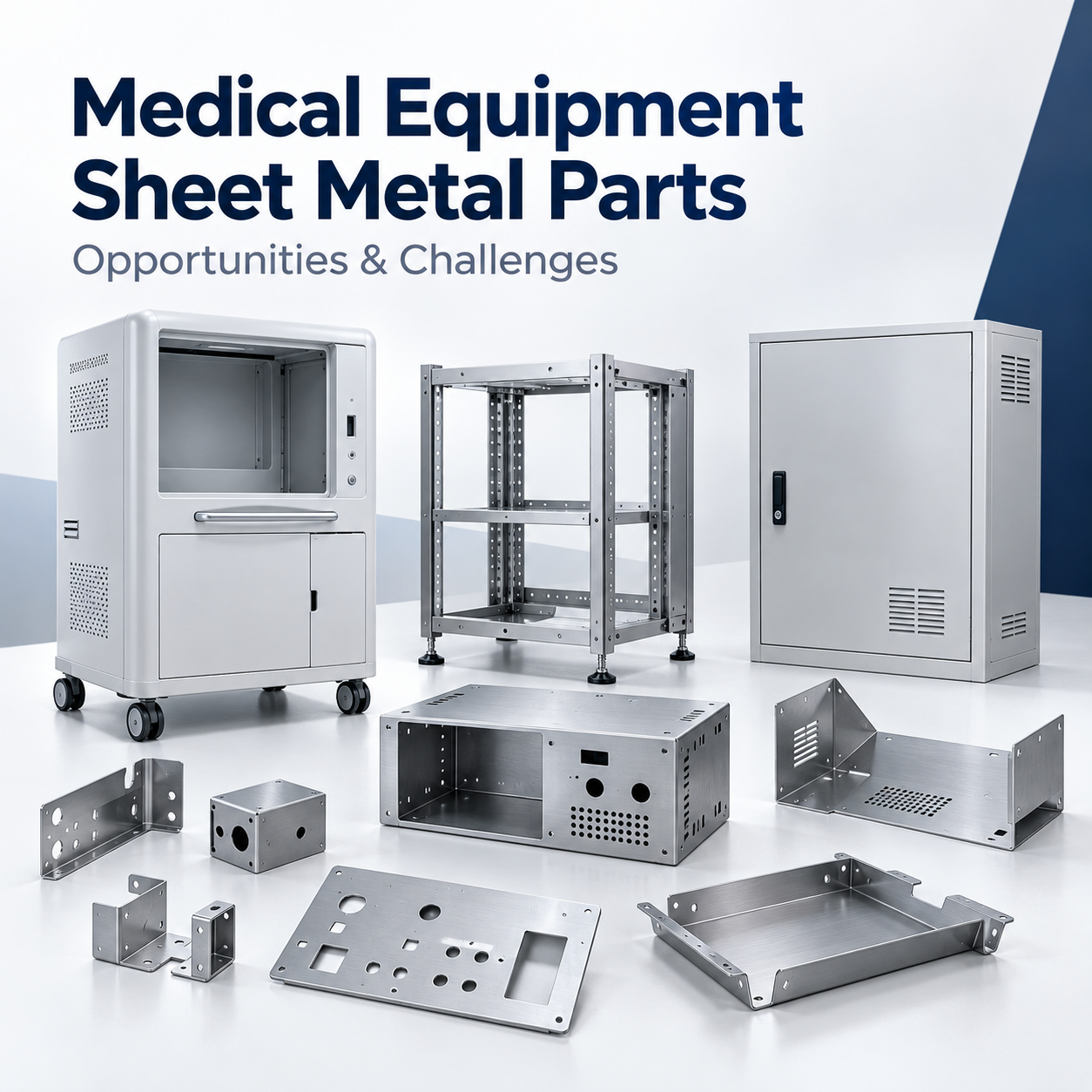
These components include equipment frames, external housings, supporting brackets, electrical cabinets, internal mounting structures, and protective panels.
As medical device manufacturers continue developing more customized and sophisticated products, the demand for high-quality Medical Equipment Sheet Metal Parts is increasing.
Unlike general industrial sheet metal components, medical equipment structures often require higher standards for dimensional accuracy, surface quality, cleanliness, corrosion resistance, and production consistency.
For sheet metal manufacturers, the growth of the medical device industry creates new opportunities, but it also brings higher manufacturing challenges.
Table of Contents
· The Growing Demand for Medical Equipment Structures
· Why Sheet Metal Parts Are Important in Medical Devices
· Key Manufacturing Requirements for Medical Equipment Sheet Metal Parts
· Material Selection for Medical Device Structures
· Flexible Manufacturing for Low-Volume Medical Equipment Production
· Surface Quality and Appearance Requirements
· Quality Control and Traceability
· Opportunities and Challenges for Sheet Metal Suppliers
· Medical Equipment Sheet Metal vs General Industrial Sheet Metal
· How Manufacturers Can Support Medical Device Companies
· Frequently Asked Questions
· Conclusion
The Growing Demand for Medical Equipment Structures
The medical device industry has continued expanding globally due to several long-term trends, including aging populations, increasing healthcare investment, rising demand for diagnostic equipment, and continuous technology development.
According to industry research organizations, the global medical devices market has reached hundreds of billions of dollars and is expected to maintain steady growth in the coming years.
This growth is not only creating opportunities for medical device companies.
It is also increasing demand across the supply chain, including:
· Precision machining suppliers
· Electronic component manufacturers
· Surface treatment providers
· Sheet metal fabrication companies
· Equipment assembly partners
Medical equipment manufacturers often operate differently from traditional mass-production industries.
Many medical devices have:
· Complex structures
· Multiple product models
· Lower production quantities
· Frequent design updates
· Strict appearance requirements
This means suppliers need flexible manufacturing capabilities rather than only high-volume production capacity.
Why Sheet Metal Parts Are Important in Medical Devices
Sheet metal components may account for only part of a medical device's total cost, but their influence on equipment performance can be significant.
Typical medical equipment sheet metal applications include:
Equipment Enclosures
External housings protect internal electronic systems, sensors, control modules, and mechanical assemblies.
The enclosure must provide:
· Structural protection
· Clean appearance
· Easy maintenance access
· Proper ventilation
· Compatibility with internal components
Supporting Frames and Structures
Many medical devices contain heavy modules, moving components, or precision mechanisms.
Structural parts must provide sufficient rigidity while maintaining accurate positioning.
A small deformation in a supporting structure may affect equipment alignment or long-term stability.
Electrical Cabinets and Control Boxes
Modern medical equipment often integrates complex electronic systems.
Electrical cabinets and control enclosures need to support:
· Component installation
· Cable management
· Heat dissipation
· Equipment protection
Internal Mounting Components
Brackets, panels, holders, and mounting plates help position critical components inside the equipment.
Although these parts may not be visible to users, their accuracy directly influences assembly efficiency and equipment reliability.
Key Manufacturing Requirements for Medical Equipment Sheet Metal Parts
Medical equipment manufacturing places higher expectations on sheet metal suppliers compared with many general industrial applications.
The main requirements include precision, appearance, strength, and reliability.
Dimensional Accuracy and Assembly Consistency
Medical devices often contain multiple interconnected systems.
Sheet metal parts must match:
· Electronic modules
· Mechanical assemblies
· Sensors
· Moving components
· External panels
Incorrect hole positions, inconsistent bends, or assembly deviations may create problems during final equipment integration.
Therefore, manufacturers need reliable control over:
· Laser cutting accuracy
· Bending consistency
· Welding deformation
· Final dimensional inspection
For medical equipment manufacturers, stable repeatability is often more important than producing one perfect prototype.
Structural Strength and Long-Term Stability
Many medical devices operate continuously for long periods.
Supporting structures need to withstand:
· Equipment weight
· Mechanical vibration
· Repeated operation
· Transportation stress
Material thickness, reinforcement design, welding quality, and structural layout all influence final performance.
A well-designed sheet metal structure should provide sufficient strength without unnecessary weight or excessive material usage.
Surface Quality and Clean Appearance
Appearance requirements are another important difference between medical equipment and many industrial products.
Medical devices are often installed in hospitals, laboratories, and professional healthcare environments.
Visible surfaces may require:
· Smooth finishing
· Consistent coating
· No obvious scratches
· No welding marks
· Easy cleaning characteristics
Surface treatment processes such as powder coating, polishing, brushing, anodizing, or other protective finishes need to be carefully controlled.
Poor surface quality can affect not only appearance but also cleaning convenience and long-term durability.
Material Selection for Medical Device Structures
The correct material depends on equipment design, environment, and performance requirements.
Common materials include:
· Stainless steel
· Aluminum alloy
· Cold-rolled steel
· Galvanized steel
Material | Advantages | Typical Medical Equipment Applications |
Stainless Steel | Corrosion resistance, easy cleaning, durable surface | Medical cabinets, laboratory equipment, hygiene-focused structures |
Aluminum Alloy | Lightweight, good corrosion resistance, easy machining | Portable medical equipment, lightweight frames |
Cold-Rolled Steel | High strength and cost efficiency | Equipment frames, structural supports |
Galvanized Steel | Improved corrosion protection | Electrical cabinets and industrial medical equipment structures |
Material selection should balance:
· Strength
· Weight
· Surface requirements
· Manufacturing difficulty
· Environmental conditions
· Cost
Using the most expensive material is not always the best solution.
The correct choice depends on the actual application.
Flexible Manufacturing for Low-Volume Medical Equipment Production
One of the biggest characteristics of medical equipment production is “multiple varieties with relatively small production quantities.”
Unlike automotive manufacturing, where millions of identical components may be produced, medical equipment companies often develop specialized products for different applications.
This creates challenges for suppliers.
A sheet metal partner needs to support:
· Frequent drawing changes
· Different product models
· Small batch production
· Quick engineering communication
· Stable quality between batches
Flexible manufacturing technologies help address these requirements.
Examples include:
· CNC laser cutting
· CNC bending
· Digital production management
· Flexible welding systems
· Modular tooling
· Process traceability systems
These capabilities allow manufacturers to maintain efficiency while handling customized orders.
Quality Control and Traceability
Medical equipment suppliers increasingly require stronger quality management.
A reliable sheet metal supplier should control the complete manufacturing process, including:
· Incoming material inspection
· Production process control
· Dimensional inspection
· Welding quality checks
· Surface inspection
· Final assembly verification
Traceability is also becoming more important.
Manufacturers may need records related to:
· Material batches
· Production processes
· Inspection results
· Component history
This helps medical equipment companies manage product quality throughout the equipment lifecycle.
Medical Equipment Sheet Metal vs General Industrial Sheet Metal
Comparison Area | General Industrial Sheet Metal | Medical Equipment Sheet Metal |
Main Purpose | Structural protection and equipment support | Protection, appearance, precision and reliability |
Appearance Requirement | Depends on application | Usually higher due to healthcare environment |
Production Model | Often larger batches | Frequently customized small batches |
Material Selection | Mainly based on strength and cost | Balance strength, cleanliness and corrosion resistance |
Quality Focus | Functional performance | Function, safety, consistency and traceability |
Supplier Capability | Processing ability | Engineering support plus manufacturing control |
This difference explains why medical device manufacturers often look for specialized sheet metal partners rather than ordinary fabrication suppliers.
Opportunities and Challenges for Sheet Metal Suppliers
The expansion of medical equipment creates significant opportunities.
However, suppliers also face several challenges.
Opportunity: Growing Demand for Customized Structures
As medical devices become more specialized, demand for customized housings, frames, and structural components increases.
Challenge: Higher Manufacturing Standards
Medical equipment suppliers must maintain consistent quality because component failures can affect equipment operation.
Opportunity: Long-Term Supplier Relationships
Medical device companies often prefer stable suppliers that can support product development and future improvements.
Challenge: Engineering Collaboration
Successful projects require early communication between equipment designers and manufacturing engineers.
A supplier involved during the design stage can often help improve:
· Manufacturability
· Material utilization
· Assembly efficiency
· Production cost
How Manufacturers Can Support Medical Device Companies
A strong Medical Device Enclosure Manufacturer should provide more than fabrication services.
The ideal supplier should support customers through:
Engineering Assistance
Review designs and identify possible manufacturing improvements before production.
Flexible Production
Handle prototypes, small batches, and repeat orders with consistent quality.
Process Integration
Combine cutting, bending, welding, machining, finishing, and inspection into one controlled workflow.
Quality Management
Provide reliable inspection and production records.
Long-Term Cooperation
Support product upgrades and future generations of medical equipment.
What This Means for Hongdingtian
Hongdingtian (Suzhou) Intelligent Technology Co., Ltd. focuses on precision manufacturing solutions including sheet metal fabrication, machining, and customized equipment structures.
For medical equipment manufacturers, this type of integrated manufacturing capability is valuable because modern medical devices often require multiple processes working together.
A single project may involve:
· Precision-cut panels
· Bent enclosures
· Welded frames
· Machined mounting components
· Surface-treated covers
· Final structural assemblies
By combining engineering understanding with manufacturing capability, suppliers can better support medical equipment companies throughout product development and production.
Frequently Asked Questions
What sheet metal parts are commonly used in medical equipment?
Common components include equipment housings, electrical cabinets, supporting frames, mounting brackets, panels, and internal structural parts.
Why do medical equipment manufacturers need specialized sheet metal suppliers?
Medical equipment requires higher standards for precision, appearance, cleanliness, reliability, and production consistency compared with many general industrial applications.
Which materials are commonly used for medical equipment sheet metal parts?
Stainless steel, aluminum alloy, cold-rolled steel, and galvanized steel are commonly used depending on strength, corrosion resistance, weight, and application requirements.
Why is flexible manufacturing important for medical equipment production?
Medical equipment often involves multiple models and smaller production quantities. Flexible manufacturing allows suppliers to respond quickly to design changes while maintaining quality.
Conclusion
The development of the medical device industry is creating new opportunities throughout the manufacturing supply chain.
Behind every advanced medical system are structural components that support its operation, protection, and long-term reliability.
High-quality Medical Equipment Sheet Metal Parts require more than cutting and bending capability.
They require:
· Accurate engineering understanding
· Appropriate material selection
· Reliable forming and welding processes
· High-quality surface treatment
· Strict quality control
· Flexible production capability
For medical equipment manufacturers, choosing the right sheet metal partner can influence not only production efficiency but also the final performance and reliability of their products.
Hongdingtian (Suzhou) Intelligent Technology Co., Ltd. combines sheet metal fabrication, precision machining, and customized manufacturing capabilities to support complex equipment projects.
As healthcare technology continues advancing, the demand for reliable, precise, and flexible medical equipment manufacturing partners will continue to grow.